Showing posts with label Manners. Show all posts

Thursday, 17 July 2014

Minimal Pairs


Hand shape, orientation, location and movement are all used to differentiate signs. Subtle differences in any one of these can indicate something completely different. These similar signs which differ in small ways are called 'Minimal pairs' (Blyth & Onley-Zerkel, 2014).

Hand shape: the movement for INTERVIEW and COMMUNICATION are the same, but the hand shape differentiates the two:


Orientation: the sign for PAPER vs. DRUGS differs in that paper uses fists with the palms facing inwards, and drugs have the palms facing towards the signer.


Location: this is the lexicalised sign for BEAUTIFUL. The same sign, but starting from the chest and not the chin, means WELL


Movement: STOP and HELLO differ in their movements. Hello features an arm wave. Facial expression (non-manual feature) is also used to differentiate the two.


Blyth, J. & Onley-Zerkel, R. (2014). Workshop 6: Vocabulary and Lexicalised Signs [Powerpoint Slides]. Retrieved from EDUC20076, University of Melbourne Blackboard Learn: https://app.lms.unimelb.edu.au/

Introducing Oneself, and Fingerspelling

When introducing oneself, it is necessary to fingerspell one's name. Using the fingerspelling tool on the Auslan signbank, one can type in their name like so:


Then, to say where you come from, you use this sign:


Then use the sign for where you come from!
Using the Auslan signbank, you can use the numbers to say how old you are. Instead of the hand movement beginning at the chest (for example, 25 on its own), to indicate that you are talking about age, the hand shapes begin at the nose:


From the nose, the below video indicates "25 years old'


Tuesday, 15 July 2014

How are you?

For use when greeting someone
Author's own

Please


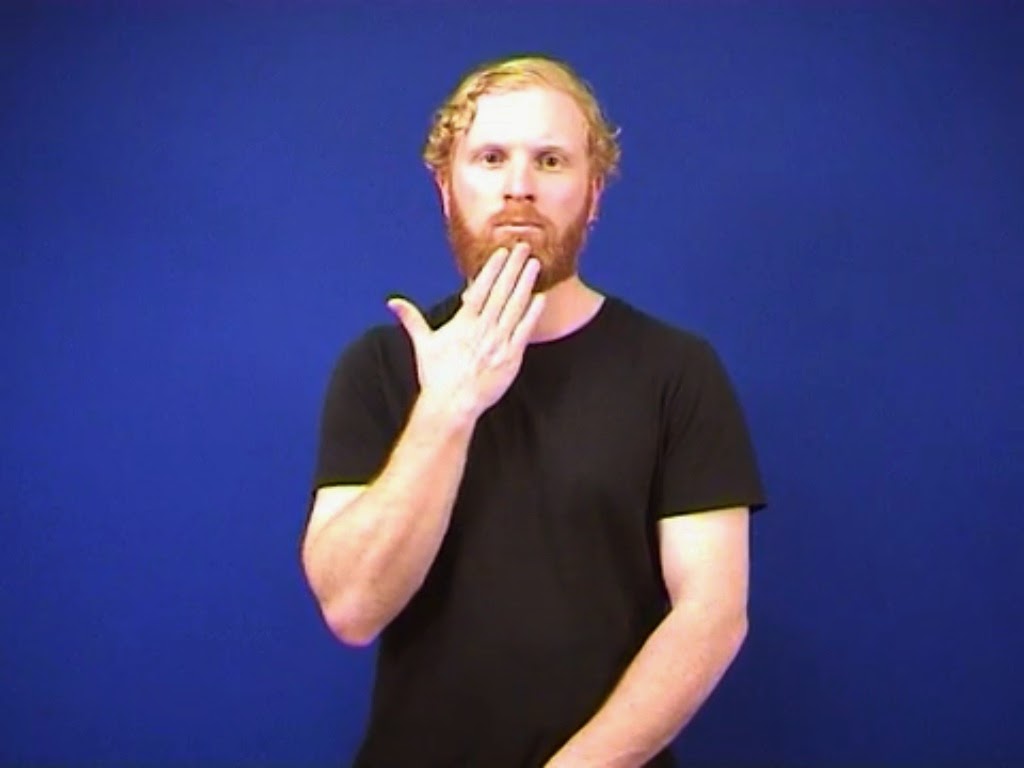
Please and thank you have similar movements.
Whereas thank you features an open hand at the chin, and then in the neutral space, please features an open hand at the chin, developing into a thumb, which points to the speaker's right.

Monday, 14 July 2014

Sorry


To wish you had not done something, regret.

Auslan Signbank. (n.d.). Sorry. Retrieved from http://www.auslan.org.au/dictionary/words/sorry-4.html

Thank You


Retrieved from Auslan signbank (www.auslan.org.au/dictionary/words/thank%20you-1.html)